| ☀️ Sunniest spots | Ponta do Sol, Calheta, Funchal (South Coast) |
| 🌧️ Wettest spots | North Coast, Porto Moniz, São Vicente |
| 🌡️ Best months | March–May & September–November |
| 🌊 Ocean temp | 18–23°C year-round |
| ⚠️ Leste season | Spring & Autumn – can hit 35°C+ from Sahara |
| 📱 Best weather app | Windy.com (ECMWF) + NetMadeira webcams |
Madeira weather is unlike anything you’ve experienced – the island has up to 8 distinct microclimates packed into just 57km of land. One of the biggest mistakes travelers make when visiting Madeira is checking a single, general weather forecast for the entire island. If your app says “Rain in Funchal,” there is a 70% chance it is perfect beach weather in Calheta or Seixal. In 2026, with the island’s increasing climatic variability, understanding microclimates is the difference between an epic adventure and a day spent inside a cold, gray cloud. This guide is your “technical manual” to mastering the island’s atmosphere.
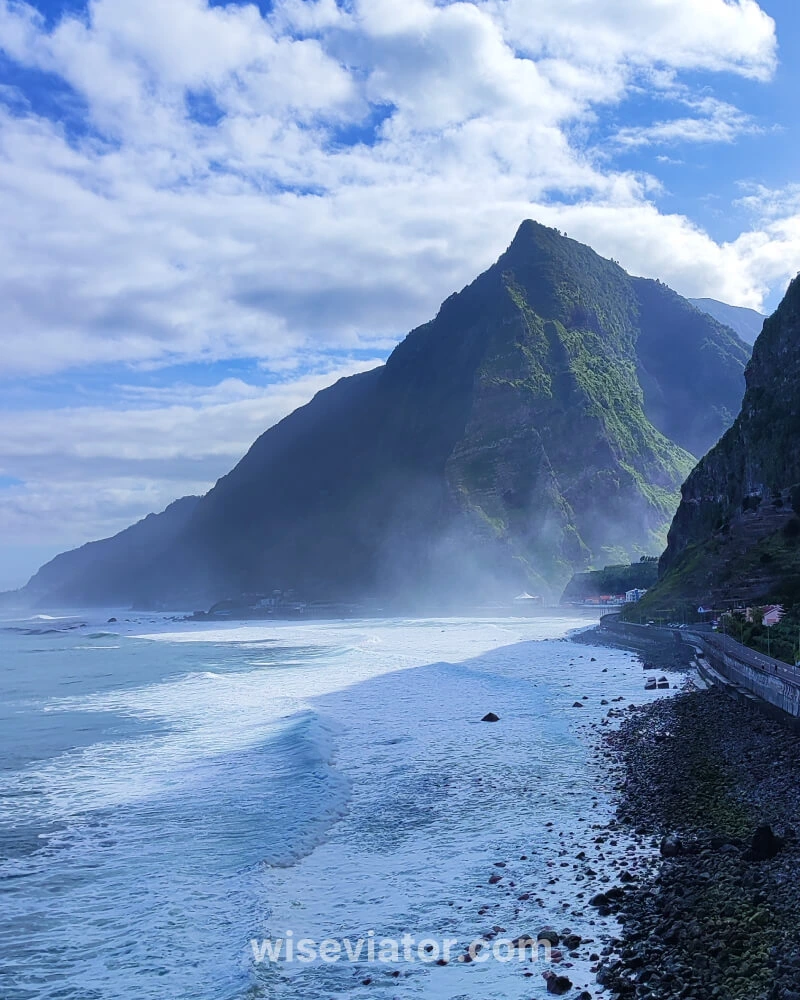
The North vs. South Divide: The 6,000-Foot Wall of Basalt
Madeira is bisected by a massive central mountain range reaching up to 1,862m (6,100ft). This geological spine isn’t just a scenic backdrop; it is a powerful physical barrier for the trade winds (Alizés) blowing from the Northeast. This 6,000-foot wall of basalt dictates the island’s entire ecosystem and creates a permanent temperature gradient between the two coasts.
Why the South is Consistently Warmer
As an “Admin” of your own trip, you need to understand the Adiabatic Heating process. When the moist, cool air from the North is forced over the central peaks, it loses its moisture (as rain or mist). As this now-dry air descends the southern slopes toward Funchal, it compresses and heats up rapidly.
- The Temperature Gap: This is why the South is consistently 3°C to 6°C warmer than the North.
- The Sun Trap: While the North Coast (Porto Moniz, Seixal) struggles with “oceanic” coolness and cloud cover, the South Coast (Funchal, Ponta do Sol) acts as a giant heat basin, protected from the cold Atlantic currents by the island’s massive bulk.
The Orographic Lift (The “Vapor Factory”)
When moist Atlantic air hits the North Coast, it has nowhere to go but up. As it climbs the steep northern slopes, it cools rapidly and condenses into thick clouds. This is why the North remains a prehistoric, emerald-green jungle. If you are staying in the North, you are living in the island’s “vapor factory.”
The Tunnel Rule (The Portal Phenomenon)
Because of this “spine,” Madeira’s tunnels are essentially portals between seasons. You can enter a tunnel in Funchal in 24°C (75°F) sunshine and emerge 3 kilometers later on the North Coast in a 16°C (60°F) misty drizzle. Always keep your headlights on and your wipers ready when crossing the central tunnels like the one in Encumeada.
Deep Valleys: The “Delayed Morning” & Humidity Peaks
Not all low-altitude locations are equal. Locations situated in the heart of the island’s deep volcanic valleys, such as São Vicente or Curral das Freiras, follow a completely different thermal clock.
- The Shadow Curtain: Because these towns are wedged between towering mountain walls, the sun often doesn’t reach the valley floor until late morning (sometimes as late as 10:30 or 11:00 AM). While the coastal cliffs are already heating up, the valleys remain trapped in a cool, damp shadow.
- The Humidity Trap: These valleys act as “basins” for moisture. Without direct sunlight to burn off the morning dew and mist, humidity levels here stay significantly higher. It’s a crisp, “heavy” kind of air that feels much colder than the thermometer suggests.
- São Vicente Specifics: As the “Gateway to the North,” São Vicente often feels like a wind tunnel. The air is funneled through the valley from the mountains toward the sea, creating a constant, cool draft. Even on a warm day, you’ll feel the “mountain breath” keeping the temperature a few degrees lower.
East vs. West: Windy Cliffs vs. British Greenery
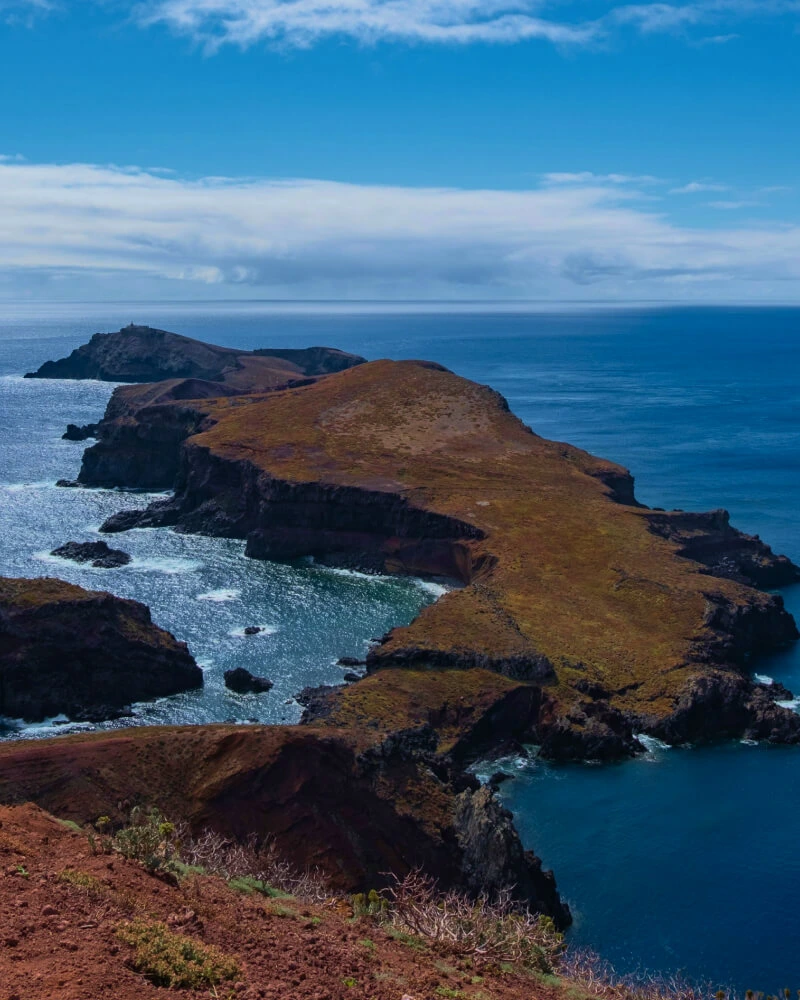
The two extremities of Madeira feel like two different planets. While they share the same Atlantic horizon, their geological age and exposure to the elements have created a stark visual and climatic contrast. The East is a raw, wind-swept desert of ancient volcanic rock, while the West is a high-altitude plateau where moisture lingers to create a lush, pastoral landscape that feels more like the Scottish Highlands or the English countryside than a sub-tropical island.
Ponta de São Lourenço (The East) – The Wind’s Playground
- The Hood Strategy: The eastern peninsula is a desert-like landscape with zero protection. The wind here is relentless. Always bring a hoodie or a headband. Constant, high-velocity wind on your ears can lead to a nasty headache – don’t let the bright sun fool you into thinking it’s a “gentle breeze.”
- UV Trap: Because there are no trees, you are 100% exposed. The cooling effect of the wind masks the heat on your skin, but the UV index remains dangerous. Apply SPF 50 generously.
The West Coast – “Jurassic UK” Vibes
- The Emerald West: In areas like Prazeres or Ponta do Pargo, you’ll find rolling hills with grass so vibrant it looks like a scene from a UK-based movie, but with a tropical Madeira twist.
- Humidity & Mist: This area catches the lingering Atlantic moisture, resulting in frequent “low clouds” that keep the grass thick and the air smelling of fresh earth.
Madeira Weather by Month: 2026 Breakdown
| Month | Avg Temp (South) | Rainfall | Travel Verdict | Best Spot |
| Jan – Feb | 19°C / 66°F | High | 🌈 Rain & Waterfalls | Funchal |
| Mar – May | 21°C / 70°F | Low | 🌸 Perfect Hiking | Ribeira Brava |
| Jun – Aug | 26°C / 79°F | Very Low | 🏖️ Beach Time | Seixal / Calheta |
| Sep – Nov | 23°C / 73°F | Medium | 🌊 Warm Ocean | Ponta do Sol |
The Winter (December – February)
- Stats: 16°C – 20°C (61°F – 68°F) on the coast.
- Strategy: Stay in Funchal or Ponta do Sol (Ponta do Sol is statistically the sunniest spot even in February 2026). This is “Peak Waterfall Season” for photographers. Note: The peaks can occasionally see snow.
The Spring (March – May)
- Stats: 18°C – 22°C (64°F – 72°F).
- Vibe: Flower Festival season. The air is fragrant, and the levadas are lush.
- Strategy: Best time for hiking the central peaks (Pico do Arieiro) before the summer heat.
The Summer (June – August)
- Stats: 23°C – 27°C (73°F – 81°F).
- Strategy: Head North! Seixal and Porto Moniz are perfect during these months as the northern winds are warmer and the ocean is calmer.
The Autumn (September – November)
- Stats: 20°C – 24°C (68°F – 75°F).
- Vibe: The ocean is at its warmest (23°C/73°F).
- Strategy: Ideal for diving and canyoning. November is the “hidden gem” month for low prices and mild sun.
Why Is Madeira So Cold? (And Where to Find the Warmth)
Madeira feels colder than people expect because of three factors working together. First, the Northeast trade winds (Alizés) blow cool, moist Atlantic air onto the island year-round – this is not a tropical island in the Caribbean sense. Second, the central mountain spine (up to 1,862m) blocks and traps these winds, keeping the North Coast perpetually cool and misty. Third, altitude drops temperature fast – at Pico do Arieiro you can be in a thick cloud at 10°C while Funchal sits in 24°C sunshine below. The South Coast – especially Funchal, Ponta do Sol and Calheta – is where you find the warmth. These towns are sheltered from the trade winds by the mountains and benefit from the adiabatic heating effect described above. If Madeira feels cold to you, drive south – it takes 15 minutes.
The “Leste” Phenomenon: When Africa Says Hello
A few times a year, the wind direction flips. Instead of the cool Atlantic breeze, the Leste wind blows from the Sahara Desert.
- The Impact: Temperatures can spike to 35°C (95°F) in hours. The sky turns a hazy orange from Saharan dust (Calima).
- Warning: Fire risk increases drastically. If you see “Orange/Red” warnings for heat, cancel your forest hikes immediately.
Beach vs. Mountains: Why the Coast is a “Heat Trap”
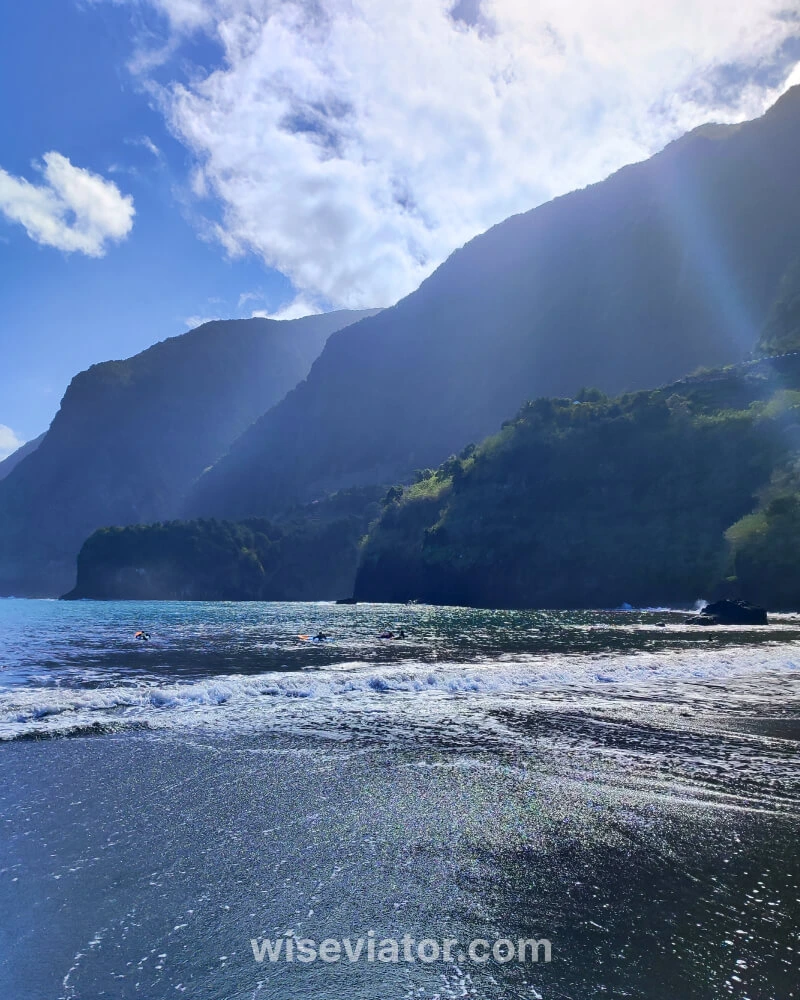
- Natural Heat Basins: Spots like Seixal or Prainha do Caniçal are sea-level “pockets” sheltered by massive cliffs. These basalt walls act as thermal insulators.
- The Seixal Example: The black volcanic sand is a massive heat absorber. Even if the air is 22°C (72°F), the sand and the surrounding “green walls” can make the beach feel like a 28°C (82°F) tropical oven.
Las Fanal: The Fog Lottery (How to Win)
- Mist is the Goal: Fanal without fog is just a beautiful park. You need low clouds to settle on the Paúl da Serra plateau.
- The Pressure Rule: Check live webcams on NetMadeira. If the peaks are “swallowing” clouds, Fanal will look like a fantasy movie.
- Thermal Shock: Fanal can be 10°C colder than the coast. Without a rain jacket, you’ll be shivering in 15 minutes.
Levada Microclimates: The “Natural Refrigerator”
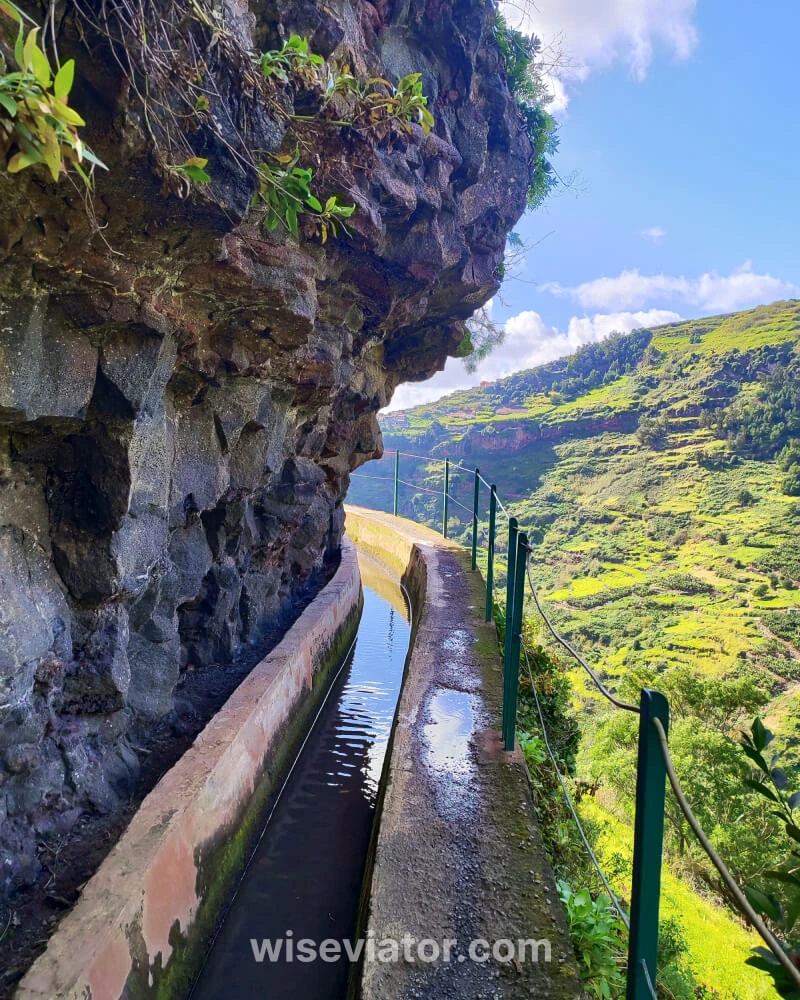
The water in the levadas (around 10-12°C / 50-54°F) creates a powerful “Refrigerator Effect”. Walking beside this continuous “ice-bath” in deep, shaded canyons means the air is perpetually cooled by the moving water and the high humidity of the damp forest.
- The Temperature Drop: It’s consistently 5-10°C (9-18°F) cooler than the coastal sun traps. If it’s a 25°C (77°F) day in Funchal, expect a crisp 15°C (59°F) on a deep trail like Levada do Caldeirão Verde.
- The “Basalt Cold”: In narrow canyons where the sun never hits the floor, the massive basalt walls absorb the “coolness” of the water, creating a micro-environment that feels more like a basement than a tropical island.
- Survival Strategy: Never start a Levada walk in just a T-shirt. You might feel warm at the trailhead, but once you enter the “Refrigerator” zone, your core temperature will drop fast. A lightweight, breathable mid-layer is non-negotiable for these “technical” walks.
Weather Apps are Lying to You
Standard apps use global models (9-13km resolution). They cannot “see” a 1,800m mountain that is only 20km wide.
- The Solution: Use Windy.com (ECMWF model) or IPMA.
- The 15-Minute Rule: If you don’t like the weather, drive through one tunnel.

The “Early Bird” Tactical Advantage
- The Weather Window: 7:00 AM – 10:30 AM is the golden time. Skies over the peaks (Pico do Arieiro) are usually clear before the ground heats up.
- Afternoon Buildup: By 1:00 PM, the mountains are often “swallowed” by mist.
What to Pack: The Layering Strategy
- Base Layer: Moisture-wicking T-shirt.
- Mid Layer: A solid fleece or hoodie (Mandatory for São Lourenço wind).
- Outer Layer: A high-quality rain jacket (Gore-Tex).
- Footwear: Trail running shoes or hiking boots with aggressive lugs.
Your Secret Weapon: Live Webcams (NetMadeira)
Check the live cams for Pico do Arieiro, Seixal, and Porto Moniz before you hit the road. If the webcam shows gray, but the radar shows clear skies 10km away – use your rental car to chase the sun! This is why having your own wheels is non-negotiable in Madeira.
Final Expert Tip: Cross-reference this with our Madeira Parking Guide to avoid stress! If you get stuck due to weather-related flight delays, remember to check your Flight Compensation Rights.
FAQ: Madeira Weather, Sunniest Spots & Travel Tips
What is the sunniest place in Madeira?
Historically, the South Coast is the sunniest. Towns like Ponta do Sol and Calheta are known as the island’s sun traps, protected by the mountains from the northern clouds.
Is it warm enough to swim in Madeira in winter?
The ocean temperature stays around 18°C–20°C (64°F–68°F) year-round. While the air might be 19°C, the water is surprisingly mild. If you’re a UK traveler, it’ll feel like a warm British summer.
Does it ever snow in Madeira?
Yes, but only on the highest peaks like Pico do Ruivo and Pico do Arieiro. It usually happens once or twice a year between January and March and lasts only a few days.
Can you trust weather apps for Madeira?
Generally, no. Most apps show a general forecast for Funchal or the airport. For real-time tactical planning, always use the NetMadeira webcams and check the Windy.com cloud layer.
Which month is the rainiest in Madeira?
December and January are statistically the wettest months. However, rain in Madeira is often “local” – if it rains in the North, you can almost always find dry weather in the South within a 30-minute drive.